Overview
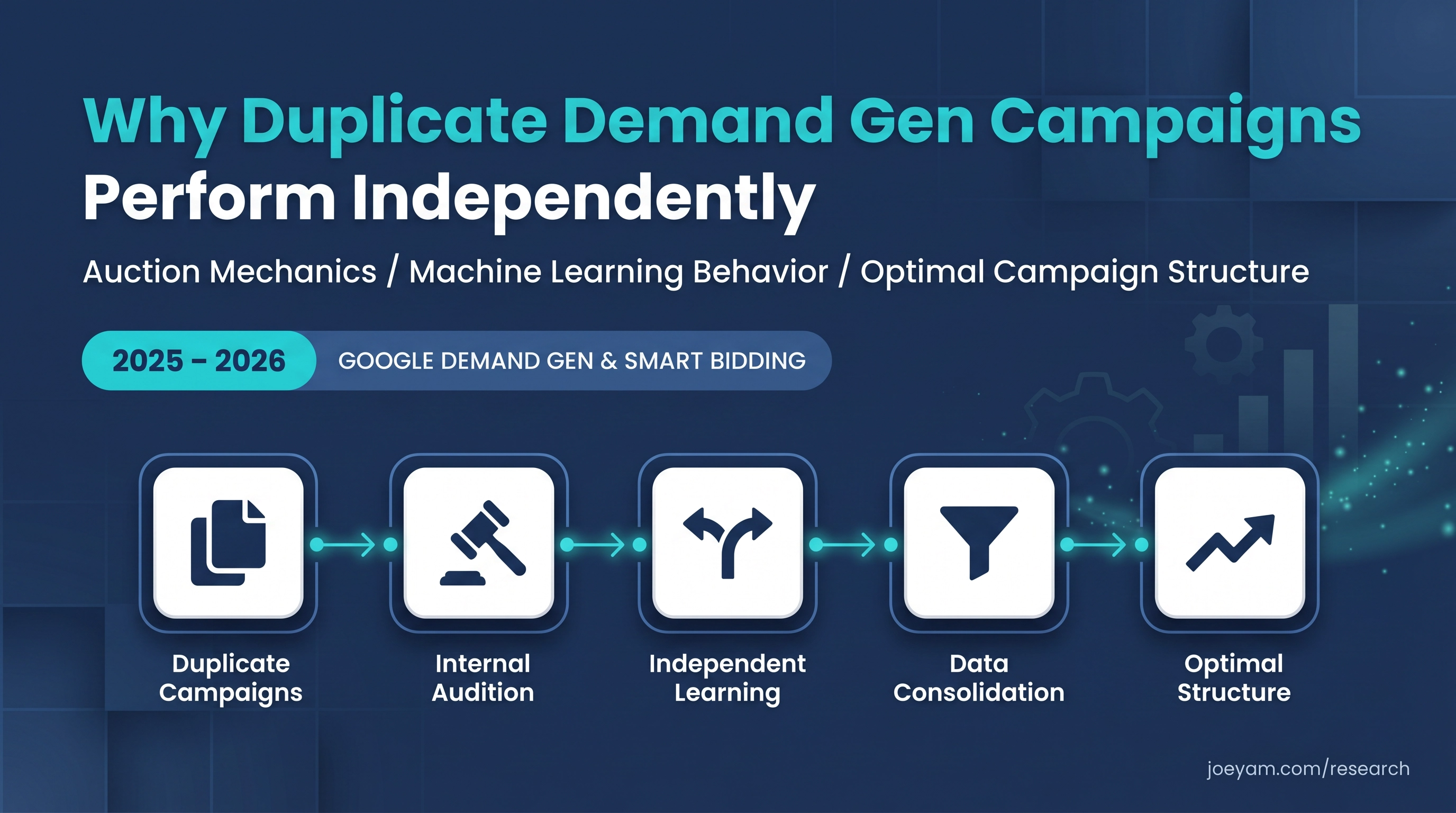
The report investigates why duplicate Google Demand Gen campaigns do not cannibalize each other in auctions. It explains Google's internal selection process that prevents self-competition and highlights how Smart Bidding enables independent learning paths for each campaign. The analysis underscores the importance of consolidation at the campaign level to maximize algorithmic efficiency and conversion rates. The document also discusses the benefits of organizing ad groups by network or creative theme, which can lead to clearer performance attribution and enhanced campaign results.
Inside This Report
The Core Question: Do Duplicate Campaigns Compete?
This section addresses common misconceptions about duplicate campaigns and explains Google's internal auction process.
Independent Algorithmic Learning: The Real Driver
Explores how Smart Bidding's machine learning allows duplicate campaigns to generate conversions independently.
The Hidden Cost: Data Fragmentation
Discusses the drawbacks of running duplicate campaigns, focusing on data fragmentation and its impact on performance.
The 2025–2026 Best Practice: Consolidation
Recommends campaign consolidation as the optimal strategy for Demand Gen, supported by data on conversion improvements.
Ad Group Structure: Audience vs. Creative Theme
Analyzes the benefits of structuring ad groups by creative theme rather than audience segment.
Network Segmentation: The Most Actionable Approach
Details the advantages of breaking ad groups by placement network to leverage distinct user behaviors and performance patterns.
How to Handle Similar Audiences
Advises against over-segmenting similar audiences and highlights the benefits of combined audience signals.
The Ideal Demand Gen Campaign Architecture
Presents a blueprint for campaign structure, emphasizing consolidation, network-based ad groups, and asset diversity.
Who Is This For?
Digital marketers and campaign managers looking to optimize Google Demand Gen strategies for improved performance and efficiency.
Ready to dive in?
Download the full report Free PDFMore Research
Align Your Ad Copies with Google's Objective (What Google Rewards / How to Build the Iterable RSA System)
This report explores how aligning ad copies with Google's objectives can enhance ad performance. It covers Google's auction mechanism, Quality Score components, and effective RSA systems.
View Report →Meta Threads Algorithm: A Reverse-Engineering Report
This report reverse-engineers the Meta Threads algorithm, detailing its core rules, key criteria, and strategies to optimize engagement. It combines evidence from official Meta sources and inferences drawn from patterns and creator experiments.
View Report →The Deep Psychology of Landing Page Persuasion
This report explores the psychological mechanisms that make landing pages effective, drawing on behavioral psychology and conversion research. It details how emotional and rational processes are orchestrated to drive conversions.
View Report →